3 min read

Your AI Agent, Your Liability: What Banks' New Terms Mean for AI Governance

Your AI Agent, Your Liability: What Banks' New Terms Mean for AI Governance
5:03

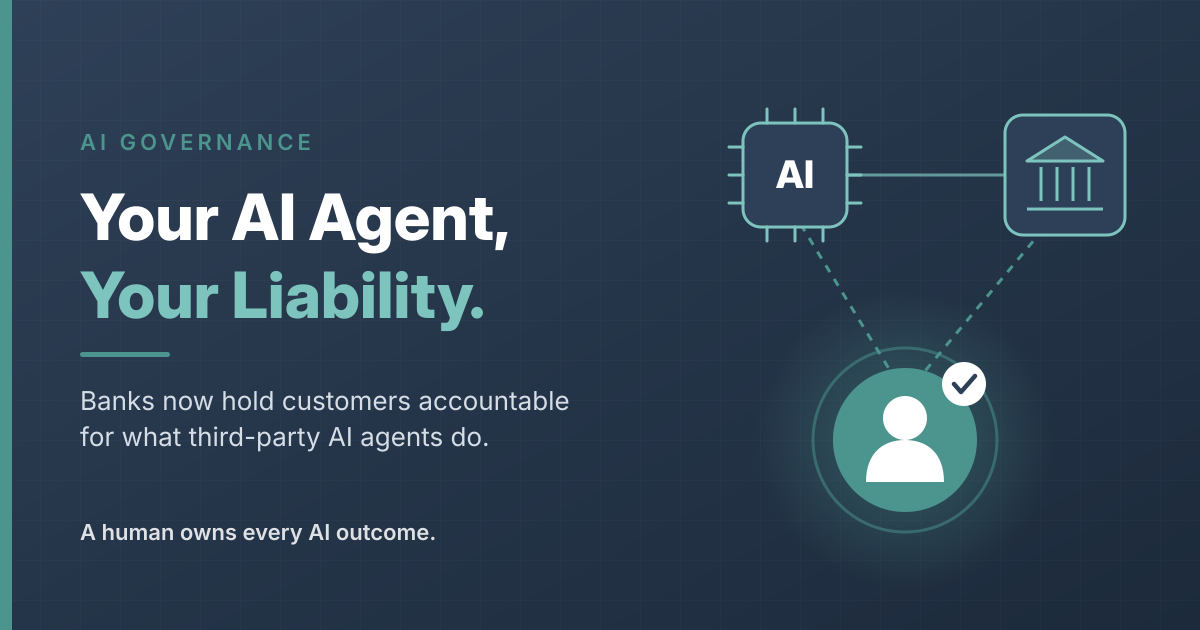
Most conversations about AI governance jump straight to frameworks, policies, and tools. Those matter. But underneath all of them sits one simple principle: every AI action and every AI output needs a named human owner.

AI can draft, decide, and even transact. What it cannot do is be held accountable. People can. If that sounds abstract, the banking industry just made it very concrete.

The Foundation of AI Governance: Human Ownership

When we say "a human owns it," we mean three things:

  • Ownership of activities. Someone approves what the AI is allowed to do, what it can access, and when that access ends.
  • Ownership of results. Someone reviews and stands behind the AI's output before it is relied on, sent, or acted on.
  • Ownership of failure. When AI gets it wrong, the consequences do not land on the tool. And AI agents fail in new ways: they can misunderstand an instruction, exceed their intended permissions, or behave unpredictably.

Frameworks like the NIST AI Risk Management Framework and ISO/IEC 42001 put accountability at the center for a reason. Inventories, controls, and monitoring all depend on knowing who is responsible.

Banks Just Made Ownership Personal

This week, Citibank updated its terms of service to tell customers who use third-party AI tools for personal finance that anything that goes wrong is their responsibility, even if they get hacked. Citi is not alone. Citi and PNC followed similar moves by Bank of America, JPMorgan Chase, Charles Schwab, and Wells Fargo in October.

Customers who grant account access to third-party AI agents "are responsible for activities conducted through those agents."

Citi spokesperson, via TechCrunch

The key point: using a third-party tool does not transfer accountability to that tool. The details make this clear:

  • Agent activity counts as yours. Under Wells Fargo's revised agreement, any instruction or transaction an AI agent initiates with your login is treated as authorized directly by you, without further verification. The bank also states it does not monitor or review agent activity.
  • Breaches count as yours, too. If an AI tool leaks your credentials or is hacked, Citi's terms make you responsible for what the hackers do with your account.
  • Revoking access is your job. Wells Fargo places responsibility on customers to properly and promptly revoke any authorization given to an AI agent.

Notably, Citi's own AI agents carry no added customer liability. Banks are drawing a clear line between tools they control and tools they don't.

What This Means for You Personally

If you use AI to help manage your finances, you are now the owner of whatever it does. A few practical steps:

  • Don't hand over raw banking credentials. Look for read-only, token-based connections. Grasshopper Bank's beta program, for example, uses OAuth so the AI agent never receives your banking password.
  • Know what's connected. Keep a list of which AI tools have access to which accounts, and revoke anything you no longer use.
  • Approve money movement yourself. Bank of America has said a human should remain in the loop to approve money leaving an account. That's good advice for everyone.

What This Means for Your Organization

The same logic applies at work, where employees connect AI tools to banking, payroll, and accounting systems every day. And regulators have not settled who pays when things go wrong. Asked twice whether customers could recover money moved by an unauthorized agent, the Comptroller of the Currency gave no direct answer.

Until they do, your governance program should:

  • Assign a named owner to every AI tool and agent in use, including "shadow AI" employees connect on their own.
  • Default to least privilege. Read-only access unless there is a documented reason for more.
  • Extend third-party risk management to cover AI agent access, and brief your board and risk committee before customers or examiners start asking.

The Bottom Line

AI can do the work, but a human still owns the outcome. The banks just put that in writing.

Pelican3 helps organizations build practical AI governance programs grounded in clear human accountability. If you're not sure who owns the AI in your organization, let's talk.

Sources

Ohio's New Cybersecurity Law Needs Partners, Not Vendors

Ohio's ORC 9.64 requires a real cybersecurity program, not just a policy. Why municipalities and public safety agencies need technology partners, not...
Read More

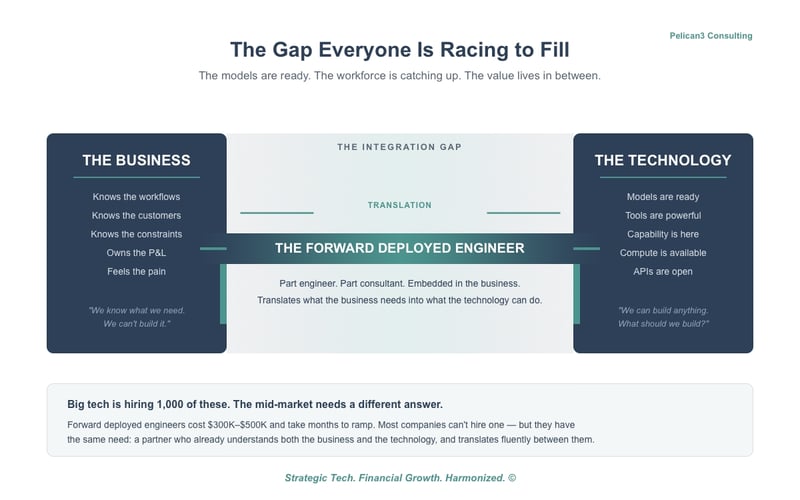
The Gap Everyone Is Racing to Fill

Big tech is hiring 1,000 forward deployed engineers to close the AI skills gap. Most companies can't hire one — here's the answer for the mid-market.

Read More

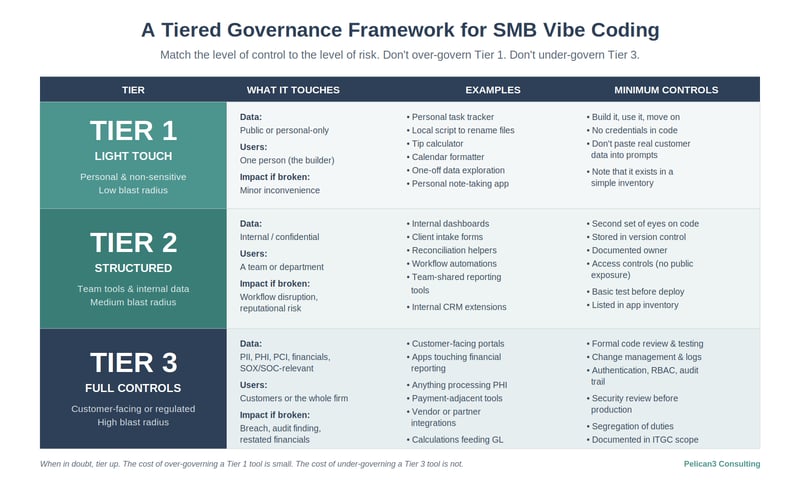
Vibe Coding for SMBs: Building Fast Without Building Risk

Vibe coding lets SMBs build software in hours, not weeks. But AI-generated code skips secure coding basics. Here's how to capture the upside without...

Read More